Do it today

Do it today

A favourite adage of Deon Botha, one of our founding members, was “Do today’s work today, and the rest will take care of itself”.

Back in 2016, he wrote a blog on this very topic titled “Thrive while you work simply to do less and get more”. My task today is to revisit this topic, and see whether we can expand on his concepts.

Get Started Today, Not Tomorrow

Procrastination is often cited as the reason for delaying or postponing tasks or actions. Whilst perfection is often regarded as a common cause for procrastination, it is a necessary evil in the life of the accountant. We all know the old story of 0.01 potentially being a large amount one way, and a similar amount (or series of amounts) the other.

The requirement for balanced controls in the General Ledger, and the often-stressful rush at month-end can often be alleviated simply by doing today whatever you need to do today.

I have a crazy schedule, where do I start?

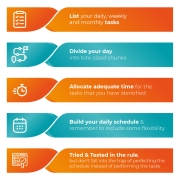
That may be a bit presumptuous. I am quite sure that most people reading this blog have ordered and tidy schedules that work all (or at least most) of the time. However, for those procrastinators like myself, discipline is key. I like to split my day according to my energy levels.

Morning is the time when many of us feel most energetic. By the time you fire up your computer, you are still brimming with energy, so you might schedule the tasks that require focus and energy during this time. The tasks that you would normally postpone are best scheduled for this time. Get them done quickly – before your energy levels dip.

Noon. Whilst some of us have the luxury of taking time for a lunch-time break, this is seldom true in the accounts department.  This is often the time when you feel somewhat lethargic, and could be a good time to schedule repetitive tasks. The important thing is to get the tasks that don’t require much thinking done while at your ebb.

Night. Time for family, friends and reading DataRapt Blogs.

And, of course, the ubiquitous schedule…

Okay, I do all that, but how can DataRapt help?

DataRapt is available in the SYSPRO Automation Design program allowing you to selectively include DataRapt sub-ledger reconciliations in SYSPRO automation runs.

You typically use this facility to automate period end tasks such as end of day, month-end etc., all without operator intervention.

A huge advantage is the facility to email the results to selected recipients. This allows the very busy accounting (or IT) team to check the reconciliation balances at a glance, without even having to launch the programs.

Isn’t that great news for a task driven team?

Fleetwood Mac sang, “Don’t stop thinking about tomorrow, it will soon be here” on the Don’t Stop track from the Rumours album. I say that the trick is to think about today, and tomorrow will take care of itself.

4 ways technology has changed our lives

Technology is all around us all the time, it has evolved and continues to evolve, and we’ve elected to highlight 4 ways that technology has changed our lives.

Technology is always with us

Older technologyBoth at home and in business, technology is always with us.  Smartphones, smartwatches, laptops, iPads, GPS – how did we ever live without them?

We have changed the way we read, listen to music, keep in touch with old friends, and purchase our groceries – all because of technology.  We need technology to function.

1. Education

Technology has changed the way people learn in a very big way.  Online and distance learning has made adult learning more accessible, while classroom learning has been enhanced with computers and the Internet.  Notebooks and blackboards are used in conjunction with technology to teach students.

These days one doesn’t have to be present to hear a lecture or be in attendance to understand a complex concept.  Technology provides students with easy access to a lecture through video conferencing.  Online tutoring has also changed the way students can learn.

2. Communication

Technology has changed the way people communicate.  People continue to communicate but they are encountering less face to face communication.

Smartphones, Voice Over IP and other methods of communicating including social media have made it easy to connect with anyone around the world.  These tools have made communication simpler, more efficient and convenient, allowing you to chat virtually and instantly share information and ideas.

Gone are the days of picking up the phone or heading over to someone’s house to chat. Smartphones and the internet have replaced traditional chats with virtual ones.

In business, technology has allowed for improved collaboration – particularly for offices that are spread around the world.  Communication tools like video conferencing have improved this communication by eliminating time and distance.

3. Productivity

SmartwatchTechnology has changed the way we do business.  You can use technology to speed up production, decrease costs, increase quality, save time, and more.

You can sell your products online; use online marketing to reach larger markets, use the internet to research your market and competitors, making you more competitive in the marketplace.

Customers expect answers in minutes, accounts and statements are sent out instantly, while bulk emails can be sent to an entire client base.

Computers have replaced filing cabinets stuffed with handwritten files and reports.  Technology has streamlined the workplace, made it more efficient.

The downside to technology in the workplace is when employees use technology for activities that aren’t work-related, like spending time on Facebook or watch YouTube videos.  This is definitely a productivity killer.

Introducing new technologies into your business without having the expertise to implement and use them effectively is also a concern to the time and cost that could be spent.

4. Mobility

Because of technology, we can now work wherever we are.  Whether it is a smartphone or a laptop, whether you are on a train or a plane, you can do business.

Wireless technology has brought with it telecommuting.  This provides people with the option to work from home or in a coffee shop; we have a flexibility that didn’t exist before thanks to the advance in mobile technology.  Mobile devices can be used for most office functions, allowing the option to not be in the office, but get the job done.

More ways technology has changed our lives

  • Cloud technology: Cloud technology can be used to store your own personal documents and files rather than filling up your hard drive.  And businesses are using it more and more rather than purchasing their own hardware.  Working in the cloud allows a business to be efficient and cost-effective.  It allows quick access to more resources if required, or if you want to reduce resources, this is also possible.
  • Online banking: Online banking has made it easier for people to access financial services from wherever they are, and to pay for goods and services at stores, or online, without requiring cash.
  • Google (or the Internet): This is where you can book flights, buy your groceries, set up a business, and connect with your customers, and friends.  It is where people manage their lives, and probably cannot live without it.

What is to come?

If we are already experiencing artificial intelligence, cloud computing, machine learning and virtual reality glasses, what next?  If we can do our jobs without leaving the bedroom or can communicate with the world from our mobile device, what is next?

We can choose to look ahead in fear or excited anticipation.  We believe the future of technology is bright and we’re looking forward to new tools that we can use to make even bigger differences in people’s lives.

Embracing technology

By harnessing much of the technology highlighted above, we at DataRapt have been able to deliver our solutions to SYSPRO users in 29 countries.

Source

• http://www.atechnologysociety.co.uk/

Achieving mindfulness

By now most people have heard about mindfulness but may not be aware of how to actually go about achieving mindfulness.  This blog outlines some basic concepts on the path to achieving mindfulness.

According to The Mindfulness Journal by Corinne Sweet, “Mindfulness is about being completely in the now. It’s about noticing this second, how you feel, what you think, what you want, without criticism or judgement. It’s about learning to notice everything in your body, your mind and your environment: the gurgles in your stomach, the twitches in your back, the clenching of your jaw, the rain on the window, the clouds in the sky, the purring of your cat, the flowers in the garden, the smile of your child, the sound of a far-off train, the traffic on the street, a bird twittering on a branch, the itch on your nose, the whirr of your computer, or the taste of a melting square of chocolate on your tongue. It is about noticing everything in the moment. It’s about learning to focus your attention in the present. This very second. This millisecond. NOW. It is about living in present time”

balance-110850_640

During your relaxation period of this year, you should attempt to achieve mindfulness while reflecting on your achievements. Try to really acknowledge them and internalise your success. Next year you will be far more organised and should attempt to achieve mindfulness in everything you do. This will increase your effectiveness and efficiency and overall satisfaction of the task.

Mindfulness does not magically reduce the stress of a task but gives you the correct frame of mind to take a step back and achieve calmness, focus, and peace in order to create an environment which helps you manage your stress adequately. Mindfulness is being scientifically researched, trained and applied in hospitals, schools and other social institutions. Meditation is a great way of achieving mindfulness.

When we talk of meditation, the first image that comes to mind is a group of Buddhist monks in orange robes sitting in silence in a temple. This is not always the case and anyone can meditate. Meditation is about taking 10 minutes out of your day to find a quiet space and centre yourself, bringing you back to the now and regaining your focus. The mindfulness application (featured in our productivity app blog) is fantastic in assisting you through 10 minutes of guided meditation. You can set reminders to achieve mindfulness each day. Regular daily practice is essential to being able to take 5 minutes of mindfulness whenever you need to.

The benefits of mindfulness

According to The Mindfulness Journal by Corinne Sweet, the benefits are as follows:

  1. It lowers stress
  2. It eases pain
  3. It calms
  4. It makes music sound better
  5. It makes food taste better
  6. It can help you relate better
  7. It can help you accept yourself
  8. It can improve your mental focus
  9. It can improve your memory
  10. It can improve your performance

There’s no doubt that mindfulness will boost your productivity, overall wellbeing and help you achieve balance in your life.

How would achieving mindfulness benefit you?

Turn New Year’s resolutions into realistic goals.

So you’ve followed our tips, downloaded all the apps, motivated your employees and you’ve had your most productive few months to date. For the first time this year, you have a little free time for yourself but no idea what to do with it. New Year’s Resolutions may be the last thing on your mind?

The most obvious ways to spend this time would be to enjoy it with your family, maybe spring-clean your house, catch up on all your favorite series, have your friends over like you promised you would 8 months ago and take a few moments to appreciate everything around you.

Some of the not-so-obvious ways to spend this downtime include:

Treat yo self

As Tom and Donna from Parks and Recreation would suggest, it’s that time of the year to ‘Treat Yo Self!’treat-yo-self

Our first suggestion would be to give yourself a pat on the back and a few little spoils for all your achievements this year. Take a moment to have some mindful reflection on all the things you have accomplished, the work you’ve put in and the obstacles you have had to overcome.

Set yourself up for success

Well, plan for how you will achieve next year’s goals! Everyone sets New Year’s resolutions – we all know the end of that story… Be different and set yourself up for success, now. Follow the SMART rule to make sure your goals are attainable and you don’t actually end up demotivating yourself by setting unrealistic goals. They should always be Simple, Measurable – qualitatively or quantitatively, Achievable, Realistic and Time-bound.

Diarise

Next, purchase a practical diary for 2017. If you’re like me, you are more than likely to note things down with a pen and paper instead of trying to sync your Google Notes to your OneNote and your cloud drive and therefore need to constantly have your diary on hand. Diarise time at the end of each month for yourself to reflect on your performance and decide what control measures to take to keep you on the right track. If you prefer to sync your diary with your mail calendar then book yourself as ‘busy’ for that time and schedule a meeting with yourself – lucky you.

Plan for action

Break your goals up into actionable items and small deliverables. This way you can measure your progress and break your goals into digestible chunks. For example, if you want to redo your study by April 2017, plan to complete small activities each month or even each week. By the end of January, you could have de-cluttered, February you could have all the paint, March you may have planned to sell all your old furniture and purchase new furniture and in April, you can paint and move your new furniture in. By breaking goals up like this, they appear less intimidating and you are less likely to procrastinate on these smaller, less demanding activities. In our blog on Productivity Applications (link), we mentioned Omnivore – a perfect project management tool that may be perfect for you if you find your goals involve many little deliverables.

Reflect

Make the most out of your ‘me-time’ at the end of each month to reflect on your progress and see where you need to refine your goals or even move up your target date.

Pat yourself on the back, move on and treat yo self!


Performance Management to Motivate and Increase Productivity

Direct the energy of your employees to be more productive and satisfied with
their work. Creating a motivating working environment can be tricky because not all individuals have the same motivators.Performance Management

Some people are motivated by their basic needs, rewards that are valuable to them, being recognised as equal to their colleagues and by the consequences of their actions (rewards or benefits.) Others are motivated through needs they learn and acquire throughout their lifetime. These needs are achievement needs, affiliation needs and power needs.

This blog will focus on those employees with a need to achieve and how to establish goals and objectives – through performance management, that motivate them to be productive.  Performance management is an ongoing process that directs an individual’s energy to achieve strategic goals.

The fact that you’re reading this probably means you’re a logical, proactive and time-conscious person so we’ve done some digging and found a step-by-step process – featured in Organisational Behaviour – A contemporary South African perspective, for performance management.

First you need to establish your employees’ key result areas, critical success factors, key performance indicators and key performance areas so you and  your employee know exactly what performance will be measured against and establish reachable goals.

Step 1: Clarify expectations

Make sure there is mutual understanding between you and your employee on what is expected of you both. The first meeting you have should establish performance objectives. These objectives will serve as a means to measure performance.

Step 2: Plan to facilitate performance

Make it easy for your employee to meet the objectives by helping them achieve by removing barriers that may inhibit performance. Maybe your employee doesn’t have access to resources, credentials, office space, contact details of clients etc.

Step 3: Monitor performance

Your busy schedule would have been what landed you on this blog so constantly watching your employee is out of the question. You can monitor them through phone calls, Skype sessions, daily reports and time sheets. Just make sure you don’t micro manage and enable your employee to find their best method of achieving objectives.

Step 4: Recognise good performance

Remember those motivators we spoke about earlier? Recognition motivates behaviour through positive reinforcement and fulfils an employee’s esteem and affirmation of values needs. Provide rewards that are valuable to the employee and show what positive consequences result from good performance – this could even be an addition 10 minute coffee break during the day, anything to show you’re noticing.

Step 5: Unsatisfactory performance.

Dealing with poor performance is never pleasant but you could be putting your employee and your business at a disadvantage if you don’t. Make sure poor performance isn’t due to a lack of training or clarity of expectations before you take further measures.  There are guidelines for dealing with unsatisfactory performance – leave us a comment if you’d like us to feature them.

Regular performance meetings are essential to stay on track. These meetings should be friendly and inviting and comment on the employee’s performance, measure progress, provide feedback, find out how to offer more assistance and set a date for the next meeting.

Hopefully your motivated, achievement-orientated employee will help you and your organisation to be more productive.


Top tips for delegating to maximize your productivity

pexels-photo-52608So, you’ve downloaded the apps, tried to work more simply and you’re still drowning under mountains of work. Perhaps you need to start delegating?

To delegate means to transfer accountability and responsibility to others. If you are a control freak, you may find this idea terrifying but with some practice and faith in others, it will become easier to let go and do less.

Delegating can take many forms. As a parent, you may ask your teenager to start prepping dinner before you get home from work, ask a friend to help with lift clubs or hire a tutor to help your child with homework. If you’re managing a business, you may find that outsourcing other professionals to help you is just what you need. This doesn’t mean outsourcing someone to take over your job.

You could delegate various small tasks to others such as:

  • Bookkeeping: an accountant
  • Creating innovative PowerPoint presentations: a graphic designer
  • Filing reports and other documents: a personal assistant (who could also fetch the kids occasionally, if required)
  • Managing your company’s social media accounts: a social media expert
  • Deliveries and collections (and maybe some grocery shopping): a driver
  • Bringing in new business: a sales person

A few of these professionals may need some additional training in order for you to confidently delegate these tasks but a few hours of training could buy you so much more productivity.

Signs that you need to start delegating:

  1. You are spending your time on tasks that are not as important as others that need your immediate attention.
  2. You are spending time on tasks that don’t require your expertise, in other words, someone else could easily perform these tasks on your behalf.
  3. You are spending time on tasks that are mundane for you but someone else may find them interesting and may present an opportunity for them to grow and learn.
  4. You are spending time on routine tasks.

Only delegate tasks once you can make the time to delegate effectively and when you are positive that you won’t be missing important insight by delegating the task. For example, you need analytics reports in order to continue your work effectively. By delegating the retrieval and dissemination of these reports, you will miss a vital opportunity to assess statistics and data that could contribute to the long-term success of your company or division. You can, however delegate the compilation of various reports into one document to save you the time of having to search multiple databases to find these reports.

How to delegate effectively

  1. Set your ego and pride aside and prepare to ask for help.
  2. Be proactive about delegation, determine who you need and find them instead of waiting for them to come to you. We all know that one person that complains about washing dishes every night – desperately hoping someone will volunteer… Don’t be that person.
  3. Don’t feel bad or useless about asking others for help. Be confident in knowing that it’s because you are so successful that you now need a few extra helping hands.
  4. Trust those that you are delegating to.
  5. Delegate directly and ask for exactly what you need. Beating around the bush will frustrate the person you are asking and show them you’re not even sure what assistance you need.
  6. Don’t delegate the process. Instead, delegate the objective and performance criteria so they know what they need to achieve and they can do so on their own terms without you micromanaging them.
  7. Train them adequately and effectively the first time around.
  8. Provide them with the correct resources so that they don’t need to keep asking you to provide them. For example make sure you can give your bookkeeper all that they need upfront to ensure smooth running.
  9. Understand the limitations of the person helping you, this will help avoid frustration and overloading the person – you wouldn’t want them to end up in the position you’re in right now, would you?
  10. Practice patience.

If there’s one thing you take from this blog entry, let it be this; a quote from The Mindfulness Journal:“Practice not-doing and everything will fall into place” – Lao Tzu, Tao Te Ching

Productivity apps that could help you work simply

In our last blog we promised that we would provide you with some productivity apps to help you optimise the physical conditions to minimise distractions, regain focus and hit reboot.hands-coffee-cup-apple

Here are our top 10:

Omnifocus:

omnifocus

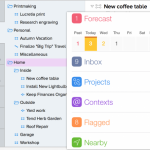
Although a bit pricey, this application allows you to make sense of all the tasks and projects floating around in your head and drop them in an ‘inbox’. You can categorise things you have to do, defer and delegate tasks and group certain tasks into projects to complete at a later stage. You can even set locations tasks with corresponding reminders such as having to purchase a new glue stick for your child the next time you pass a grocery store. This application is compatible with Mac, iPhone, iPad and the Apple watch

Streaks:

streaks

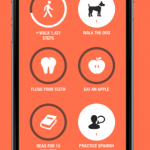
A goal-setting tool that allows you to choose up to 6 tasks you want to complete on a daily basis. Each time you complete these tasks, the streak is extended and you stay motivated to create habits out of these tasks by not wanting to break your streak! There may be tasks you don’t want to complete every day, in which case, you can even set certain days to complete certain tasks. This application is available for iPhone, Apple Watch and will soon be available for android download.

Cold turkey:

cold-turkey-2

This is a Windows-based application, which allows you to block distractions by preventing access to certain websites at any time of the day. It is a fully customisable application and makes it incredibly difficult for the user to by-pass the block on the distraction. For example, if you don’t want to be distracted by Facebook between 9am and 12pm, you can block access to this site and prevent distractions.

Freedom:

freedom
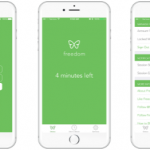
This application is very similar to Cold Turkey but is available as an application and gives you the ability to block certain applications as well – not just websites.

Rescue time:

rescue-time
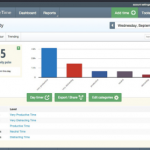
We told you in our last blog to keep track of where you are spending your time. RescueTime is an app that runs in the background of your mobile device and desktop to keep track of where you are spending most of your time so that you can implement better time management to increase productivity and minimise distracters (such as Facebook) using other tools such as Cold Turkey or Freedom.

Headspace:

headspace

This is the perfect application to clear your mind and hit restart. The application takes a modern approach to meditation with educational animations that provide simple explanations of meditation techniques and how to maximise effectiveness. There are 10 free levels, each of which includes 10 minutes of guided meditation.

Checkmark:

checkmark

Remember we spoke about positive procrastination a few blogs ago? This application allows you to create a checklist of what you want to achieve for the day. You can mark off what you’ve completed and receive reminders of what you still need to do. You can review which tasks you’ve managed to complete and which need to roll over to the next day.

Priorities:

priorities

Similar to Omnifocus, this application allows you to prioritise your tasks, share tasks with others, integrate activities with your calendar, email your tasks and intuitively categorise all the different projects and tasks that need to be completed. The only difference between this application and Omnifocus is the interface and this application is a fraction of the cost.

Day one:

day-one

This application won’t contribute towards your productivity but for those weeks where you feel like you haven’t accomplished much, this application is perfect. Once you’ve learnt how to free up space in your day, use some of this free time to jot down what you’ve accomplished for the day and how you felt. That way, when the week is over and you’ve lost track of what you’ve done you can look back at your journal, pat yourself on the back and start again.

Breath2Relax:

b2r

Although not the prettiest looking application, this is a stress management tool that provides breathing exercises to help you manage anxiety, anger and stabilise your mood.

Work Simply

Referring to the work of Carson Tate – author of Work Simply, working simply is about being able to manage your attention in a world loaded with factors and variables that constantly demand your attention. Our attention is constantly interrupted by physical and psychological noise, which are distractions that could cost you and ultimately your business and family life.

Attention typescoffee-cup-mug-desk

Our attention is classifiable into two types – voluntary and involuntary attention. At this very moment, you are exercising your voluntary attention while choosing to read our second blog entry in this series because it is the attention you have control over.

Your involuntary attention may be stolen unconsciously by the radio in the background, the flashing light on your mobile device, the ping of your email or the noise your co-worker is making while sipping on their juice box. We unconsciously exercise this attention to be aware of our external surroundings.

With all the external noise, you are choosing to pay selective attention to reading this blog but the human mind is a complex thing and your attention may start to wander to the juice-box-sipping colleague, which may finally cause you to get up and leave. In which case, we’ll find you here a little later.

3 main external and internal noise factors that steal our voluntary attention:

  1. Intense emotion
  2. Physical discomfort
  3. Psychological insecurity

The three above factors cause us to be distracted and steal our attention from the main task we are trying to complete. How can you attempt to successfully complete your report if you got 2 hours of sleep the night before because you were fighting with a partner and are unsure of where you currently stand with them?

By identifying the sort of noise factors stealing your attention, you can focus your attention on how to better manage yours.

3 exercises you can do to manage your attention:

Exercise 1

Find periods of 4 hours during your day throughout the week to take note of the factors that have the privilege of your attention – causing it to wander. The way you track this is entirely up to you – you can use a tracking app, a diary or even a spreadsheet. Identify the factors and then write them down. Over the week, identify patterns and the factors, which take the most of your attention.

Exercise 2

Once you’ve identified which factors cause your attention to wander you can optimise the physical conditions to minimise these distractions.

Here are a few suggestions:

  • If you know you’re having a long day, ensure you have enough lunch and snacking foods so that you don’t focus your attention on thinking about how hungry you are
  • Make time in your day for gym or some form of physical exercise to relieve anxiety and stress – especially if you know you’re going to have a stressful day
  • Download some great productivity apps – featured in our next blog
  • Make playlists for certain situations or even make use of Apple’s curated playlists which have categories such as ‘Focus’, ‘Motivation’ and ‘Workout’
  • Have a back-support cushion and a posturepedic chair to avoid physical discomfort.

Exercise 3

Retrain your brain through a brain reboot. Most of us can multi-task but we all have the ability to ‘multi-think’ where we are ‘thinking of a million things at once – a saying we all heard from our parents at some stage in our lives. This is a bad habit that we’ve developed as we are creating our own psychological noise, which decreases our ability to focus and decreases our productivity. Here are a few suggestions to overcome this:

  • According to Dr Pillay, visualise a reset button in your brain and say, “I need to hit reboot and get back on track”. By explicitly stating that you are over-thinking, you have drawn attention to this and can choose what to focus your full attention on.
  • Breathing techniques – according to Tate, one method you can use to regain your focus is by “taking a deep inhalation breath, pushing out your naval, and then powerfully expelling the air by slightly bringing in your stomach. Repeat this breath five to seven times and observe how the tension and mental chatter in your mind dissipate.”

Identifying your distractions and learning how to deal with or avoid them can drastically increase your productivity. What are your biggest distracters?

Thrive while you work simply to do less and get more.

clockThe blogs in this series enjoy a sweet sense of irony. We will be taking the time to provide you with (what we think is) great insight into how to save you time and be a little more productive by referring to the works of Arianna Huffington, Shaa Wasmund, Tony Crabbe, Carson Tate and Corinne Sweet and some really great bloggers. However, that’s what we do here at DataRapt, our time invested in our product offering aims to enable you to do less, live more and thrive. While taking the time to read these little entries your positive procrastination could actually make you somewhat productive.

Positive procrastination?

Isn’t that what’s happening here? You’re probably about to start following up on that customer support email, convert that marketing lead, finish off your books for the day or even put the kids to bed. But there’s this blog and could there be anything more interesting and important than reading this blog right this very second? You could be daydreaming out the window or playing candy crush but instead you’ve decided to devote your attention to a piece of writing on how to be more productive.

I read a blog post the other day about this concept and it really stuck. The concept goes a little like this – it’s human nature to put things off and ‘get back to that later’ but there’s a fine line between being lazy and being productive in other aspects of your life. The positive procrastinator may put something off but end up completing a magnitude of other tasks (cleaning out your cupboard and washing your two dogs still counts!) and then finish off that very important piece of work, of the highest quality at the last minute.

‘Last minute work that is high quality, huh?’

– You’re probably thinking but in fact, people are motivated by deadlines and can produce high-quality, creative work through intense sustained periods of concentration. Just for the record, we’re not in any way suggesting this as a long-term work habit, but rather to assure you that you will be okay if you’ve been putting off those big tasks and not ‘slaying the dragon’ or ‘eating the frog’ like society tells us to.

A 5-step productivity hack.

According to HAN-GWON LUNG, contributor to Are You a ‘Positive’ Procrastinator or Just Plain Lazy? – http://ow.ly/SqYH3042VPH
“Charles M. Schwab paid productivity consultant Ivy Lee what today would equate to $400,000 to teach his executives this five-step productivity hack:

1. At the end of each workday, write down the six most important things you need to accomplish the next day. Do not write down more than six tasks.
2. Prioritize those six items in order of their true importance
3. When you arrive the next day, concentrate only on the first task. Work until the first task is finished before moving on to the second one
4. Approach the rest of your life in the same fashion. At the end of the day, move any unfinished items to a new list of six tasks for the following day
5. Repeat this process every working day.”

Now obviously writing this list, prioritising it and making a routine out of it seems rather time consuming. The real return of your time invested will be how much time it will end up saving you eventually and how undeniably productive it will make you (trust me, I’ve tried and here I am, finally nailing down and writing this blog series!)

Where do you go from here? Ideally, you should start writing your priority list. Perhaps start with the task you were trying to finish before reading this blog post.

Some days you just can’t and that’s okay.
If you really just need some time out and cannot bring yourself to tick off the first item off your list or even start writing it, try this tip from the Mindfulness Journal by Connie Sweet:
“Look outside,
When you find your focus waning, find a window with a view and try this exercise.
Stand or sit comfortably near a window and look outside. Do you see street or sky? Look up and down so you can see both. Identify the fastest moving object in your vision. Consider everything moving in your eye line while you are still.
Breathe in and out, and be aware of how you are sitting or standing, bend your knees slightly.
Appreciate this moment”

We’d love to hear your best anti-procrastination tips or what you would like to see in this series. Drop us a comment below!